How 0% intro APR offers work
A 0% intro APR on purchases lets you finance large buys interest-free for 12 to 18 months. Here is how the offer works and the trap to avoid.
A credit card with a 0% intro APR on purchases lets you pay for purchases interest-free during a promotional window, typically 12 to 18 months from account opening. The card functions as a temporary interest-free loan against future income. Used carefully, it is a powerful financial tool. Used carelessly, it manufactures debt.
How the offer works
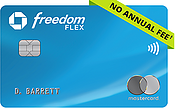
Open the card. From day one through the end of the promotional window (12 months on Wells Fargo Active Cash and Capital One Savor, 15 months on Chase Freedom Flex and BofA Customized Cash, up to 21 months on Wells Fargo Reflect), any new purchases you make accrue zero interest as long as you make at least the minimum payment each month.
The minimum payment is typically 1% to 2% of the balance, plus interest charges and fees. Since interest is zero, the minimum payment on a 0% APR balance is functionally 1% to 2% of the balance.
At the end of the promotional window, the standard variable APR (usually 18% to 28%) applies to any remaining balance going forward.
US Credit CARD Act protections mean the standard APR does not retroactively apply to the period when the balance was at 0%. The interest clock starts when the window ends.
What to do with the window
The honest answer is that 0% APR cards work best for planned spending you can pay down on a schedule.
Buy a $3,000 appliance on a card with 15 months at 0%. Divide $3,000 by 15. Pay $200 a month for 15 months. The appliance is paid off at $0 interest cost. The card balance hits zero at the end of the window. No interest ever accrues.
Buy a $3,000 appliance on the same card. Make minimum payments of $30 to $60 a month for 15 months. End the window with $2,200 left on the balance. The standard 24% APR kicks in. You now owe roughly $44 a month in interest on the remaining balance, plus the principal.
Same card, same offer, two outcomes. The difference is the payment plan.
The trap to avoid
The trap is treating 0% APR as a discount on the price.
A $3,000 purchase financed at 0% over 15 months still costs $3,000. The fact that you are paying it across 15 months does not reduce the price. The 0% APR removes the financing cost. It does not remove the purchase cost.
People who do not internalize this end up financing things at 0% they would not have bought at cash. The 0% window ends and they roll the balance onto the next 0% card, or carry it at standard APR, or get into a balance-transfer cycle. The original purchase price keeps compounding regardless of the rate.
How 0% APR cards differ from balance transfer cards
A 0% APR on purchases applies only to new purchases on the new card. It does not extend to balances you already have on other cards.
A balance transfer offer applies to debt moved from another card. The 0% balance-transfer window can be different from the 0% purchase window. Some cards offer both. Some cards offer one or the other.
If you have existing high-APR debt, you need a balance-transfer card. If you have a planned large purchase, you need a 0% APR purchase card. Read the offer terms to confirm which window applies.
After the window ends
Pay off any remaining balance immediately if you can. The standard APR is high. Even one month at 24% APR on a $1,000 balance is $20 in interest.
Set up autopay for at least the full statement balance going forward. Treat the card as a rewards card from this point on, not a financing tool.
Bottom-line recommendation
A 0% intro APR card is a planning tool, not a permission slip. Use the window for a specific large purchase, divide the purchase price by the months in the window, set autopay for that amount, and walk away. Anything else uses the offer against you.