What is a good credit card APR?
Credit card APRs range from 0% intro offers to 30% ongoing. Here is what the rate actually costs you and how to think about whether yours is good.
A credit card APR is the annual rate the issuer charges on balances you carry past the statement due date. Pay the statement balance in full each month and you owe zero interest, regardless of the APR. Carry any balance into the next cycle and the APR starts compounding daily. The number on your statement matters only if you carry balances.
What the average APR looks like in 2026
The current range across US credit cards:
- The lowest ongoing APRs sit around 17% to 19% on cards specifically designed for excellent credit and low-rate borrowing.
- The market average sits around 22% to 24% on rewards cards.
- Premium and cobrand cards average 22% to 28%.
- Cards aimed at fair credit and rebuilding average 26% to 30%.
- Penalty APRs top out around 29.99%.
These rates are variable. They move with the prime rate. The Fed sets the underlying rate. When the Fed raises rates, your APR rises within one to two billing cycles. When the Fed lowers rates, your APR drops the same way.
A “good” APR depends on the card’s purpose. A good APR on a 0% intro APR balance-transfer card is 0% for 18 to 21 months. A good APR on a cash-back rewards card with no balance carry is anything below the 22% to 24% average. A good APR on a card designed for fair-credit applicants is anything below 28%.
What the rate actually costs
A $3,000 balance at 24% APR accrues roughly $60 a month in interest. Carry that balance for a year and you have paid $720 in interest on $3,000 of original spending. The original purchases are paid off long before the interest stops accruing.
A $5,000 balance at 24% APR accrues roughly $100 a month. Same math, doubled.
A $10,000 balance at 24% APR accrues $200 a month. The hole gets deep fast.
If you cannot pay the statement balance in full, the rewards rate on the card does not matter. A 5% rewards card with a 24% APR on a carried balance is a 19-percentage-point negative spread. You are paying for the rewards in interest.
How to lower your APR
Three real paths exist.
The first is to pay off the balance and avoid interest entirely. Always the fastest answer.
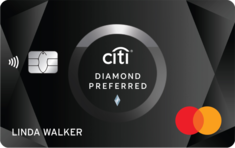
The second is a balance transfer to a 0% intro APR card. The Citi Diamond Preferred offers 21 months of 0% APR on balance transfers, which is the longest in the market. A 3% transfer fee is small compared to the interest avoided. The mechanic is straightforward: open the new card, transfer the balance from your high-APR card, pay off the balance during the intro window. If you cannot pay it off within the window, the math still saves money but less.
The third is to ask your existing issuer for an APR reduction. Call the number on the back of your card, explain that you have been a long-term customer with a good payment history, and ask whether they can lower the rate. Issuers do approve these reductions, usually by 2 to 5 points. The success rate is highest with long-tenured accounts and excellent payment history.
Penalty APRs and how to avoid them
Most US cards include a penalty APR clause in their cardholder agreement. The penalty APR triggers when you miss a payment by 60 days or more. Once triggered, it applies to the entire balance (often) and lasts until you have made six consecutive on-time payments.
The penalty APR is typically 29.99%. On a $5,000 balance, that translates to roughly $125 a month in interest instead of $100. Worse, the penalty APR can persist even after you have paid down the original balance.
Avoid penalty APRs by setting up autopay for at least the minimum due. Autopay does not have to be the full balance. Even autopaying the minimum keeps you in good standing and prevents the penalty trigger.
Bottom-line recommendation
The credit card APR is only your problem if you carry balances. If you pay in full every month, treat the APR as a number you do not need to read. If you carry balances, the APR is the single most important number on the card and rewards rates become a distraction. Focus on the lowest APR or on a balance-transfer card and worry about rewards later.