
The benchmark business card. 3x on the categories small businesses actually spend on, and the points move to airlines and hotels.
Welcome: 100,000 points Fee: $95 Top: 3x points travel, shipping, internet, cable, phone, ads
Advertiser disclosure: we are paid when you apply through some links on this page. We're paid when you apply via some links. Details
Cards for small business owners and self-employed earners. Strong bonus categories on advertising, shipping, internet, phone, and travel. The best ones earn transferable points, so business spend produces the same flexible rewards a personal card would.
The benchmark business card. 3x on the categories small businesses actually spend on, and the points move to airlines and hotels.

A $795 business card that pays 8x on Chase Travel and stacks more than $3,000 of stated annual credits, most of which are tied to specific merchants and booking channels. It is a Pay in Full card with a Flex for Business line, so it suits businesses that clear the balance monthly and will actually use the Chase Travel, Google Workspace, ZipRecruiter and DoorDash credits.

A no-annual-fee business card that pays 5% on the categories most small offices already spend on, capped at $25,000 a year. The points are worth more if you also hold a Preferred or Sapphire card.

The simplest Chase business card: 1.5% on everything, no annual fee and no categories to manage. It suits businesses whose spending does not line up with the Ink Cash bonus categories.

Best for businesses with concentrated, predictable spend that falls into the eligible 4x categories. Heavy users beat the fee comfortably.
A flat 2X business card with a $95 fee, transferable miles and $100 a year in credits that offset most of the fee. The 5X rate and both annual credits are tied to Capital One's own booking and merchant categories.

A flat 2% on the first $50,000 of yearly spend with no annual fee, plus 12 months at 0% on purchases. The 2.7% foreign transaction fee makes it a poor fit for businesses that buy abroad.

A $149 business card for companies that fly Southwest often enough to use the free checked bags, Group 5 boarding and 6,000 anniversary points. Rapid Rewards points cannot be transferred to other programs, so the value depends almost entirely on Southwest fares.
A $650 card that only pays for itself if the business flies Delta often enough to use the Sky Club visits, the companion certificate, and the annual credits. Earning outside Delta is weak at 1x to 1.5x, and SkyMiles cannot be transferred elsewhere.

Flat 1.5% back with no annual fee, rising to as much as 2.62% for Preferred Rewards for Business members. The 3% international transaction fee makes it a poor fit for businesses that buy abroad.
A low-cost business card for companies that fly Alaska or Hawaiian, with a free checked bag for up to seven people and an annual Companion Fare that can cover the fee. Points are Atmos Rewards miles, so the value is tied to one airline group.
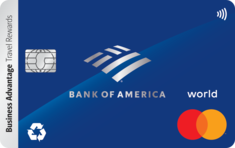
A genuinely fee-free business travel card. Booking through BofA's own travel portal earns 3x versus a flat 1.5x elsewhere, and Preferred Rewards for Business members can push that even higher.
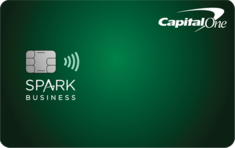
Spark Cash Plus works like a business version of a flat-rate charge card: 2% back on everything with no cap, and the $150 fee comes back if you spend $150,000 a year. The $2,000 bonus needs $30,000 in spend, so this targets businesses with real volume, not a starter card.
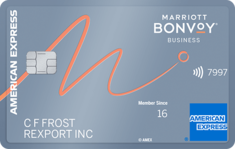
The two-tier 125,000-point bonus plus an annual Free Night Award make the $125 fee easy to earn back in year one. Earning 4x across gas, wireless, shipping and dining beyond Marriott stays is unusually broad for a hotel co-brand card.
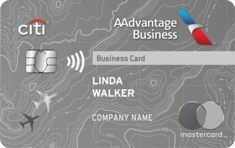
This business card earns AAdvantage miles at a strong 2x rate on airline, gas, and telecom spend, and the free checked bag for you and 4 companions alone can cover the $99 fee for a small business owner who checks bags even twice a year.
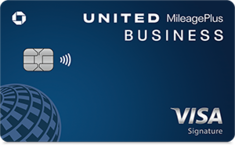
A $150 annual fee gets you 100,000 miles, 2,000 PQP toward status, and a real path to United elite tier through everyday spending. The 8x rate on United flights and free checked bag make it worth keeping if you fly United for business regularly.
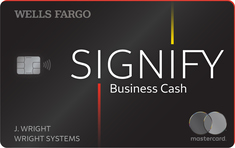
Signify Business Cash pairs flat 2% back on every purchase with a $0 annual fee, a rare combination for a business card. The $500 bonus and Priority Pass Select access make it a strong pick if you want simplicity over bonus categories.
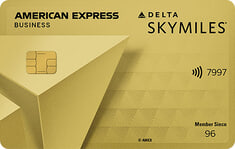
Free checked bags for up to 8 travelers on one reservation is the reason to carry this card if you fly Delta with a team. The $150 fee after the first year is easy to justify with one round trip's worth of bag fees.
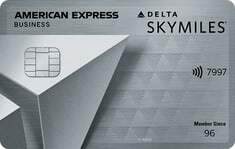
The annual companion certificate alone can be worth more than the $350 fee if you regularly buy two Delta tickets for business travel. The MQD Headstart also puts you closer to Medallion status without flying more.

Venture X Business earns 2x miles on everything with no preset spending limit, and the $300 annual travel credit plus 10,000 anniversary miles cover most of the $395 fee on their own. The February 2026 lounge changes mean free guest and authorized-user access are gone, so check those costs before counting on them.

The October 2026 relaunch doubled the annual fee to $200 but kept automatic Platinum Elite status and raised the anniversary night to 50,000 points. The 10x IHG earn rate and 4th-night-free redemptions still make it a strong pick if you book IHG properties for business travel.
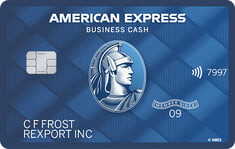
Simplicity is the whole pitch here. 2x points on every purchase up to $50,000 a year beats most flat-rate business cards, and there's no annual fee to offset.
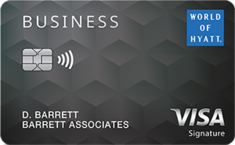
The $199 fee is real money, but the $100 annual Hyatt credit cuts it roughly in half, and Discoverist status extends to up to 5 employees for free. The 4x Hyatt rate is solid, though earning outside Hyatt and your quarterly categories drops to a flat 1x.
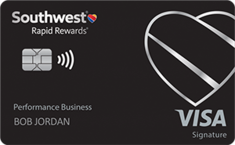
The $299 fee (up from $199 in the 2025 refresh) is the highest of any Southwest card, but the free checked bag matters more now that Southwest ended free bags for general boarding. If you fly Southwest often with a bag and want a shot at Companion Pass through spend, this card earns its keep.
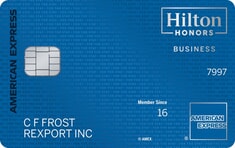
$240 a year in quarterly Hilton credits covers most of the $195 fee before you even count the automatic Gold status. The 12x earning at Hilton properties is among the highest direct-hotel multipliers of any co-brand card.
Picking your own 3% category is genuinely useful for a small business with one dominant expense line, and the $50,000 combined annual cap is generous enough that most small businesses won't hit it.
This is the budget entry point into Amex Membership Rewards for a business. Earning is thin outside the Amex Travel portal, but the low fee and flexible points make it a reasonable starter card.
The $895 fee is real money, but the $600 hotel credit, $219 CLEAR credit, and unlimited Centurion access can offset most of it if you actually use them. This card rewards businesses that book flights and hotels through Amex Travel, not everyday spenders.